
6th EDA All European Dyslexia Conference

-

Call for paper,


Logo
 

The European Dyslexia Association is delighted to announce the 6th All-European Dyslexia & Dyscalculia Conference taking place in Athens, Greece from 18 to 20 October, 2024. The EDA conference is held under the auspices of the National & Kapodistrian University of Athens and with the support of the Municipality of Athens

Girl sitting with laptop wearing a mouth cover. Text

KEYNOTE SPEAKERS

Stanislas Dehaene

Professor Stanislas Dehaene


Collége de France, Paris, France

KEYNOTE
ABOUT SPEAKER

The Development of Reading and New Tests of Dyslexia and Subtypes

 
timothy shanahanon

Professor Emeritus Timothy Shanahan


University of Illinois, Chicago, USA

KEYNOTE
ABOUT SPEAKER

The Science of Reading Instruction: Facts and Myths and Why It Matters

Picture of Silvia

Professor Silvia Paracchini


University of St. Andrews, Scotland

KEYNOTE
ABOUT SPEAKER

The Genetics of Dyslexia

 
bert de smedt

Professor Bert de Smedt


University of Leuven, Belgium

KEYNOTE
ABOUT SPEAKER

Neurocognitive Similarities and Differences between Dyslexia and Dyscalculia
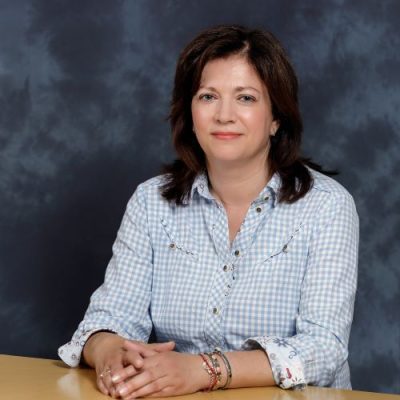
Fotini Polychrony photo

Associate Professor Fotini Polychroni


National & Kapodistrian University of Athens, Greece

KEYNOTE
ABOUT SPEAKER

Social and Emotional Adjustment of Individuals with Learning Disabilities: Identification and Support across the Lifespan

Picture of Maryanne Wolf

Professor in residence Maryanne Wolf


UCLA, USA

KEYNOTE
ABOUT SPEAKER

Dyslexia and the Reading Brain in a Digital World.


CALL FOR PAPERS

The European Dyslexia Association is delighted to announce the 6th All-European Dyslexia & Dyscalculia Conference taking place in Athens, Greece from 18 to 20 October, 2024. The EDA conference is held under the auspices of the National & Kapodistrian University of Athens and under the support of the Municipality of Athens

Prominent researchers in dyslexia and dyscalculia will deliver keynotes including:

  • Professor Stanislas Dehaene, Collége de France.
  • Professor Bert de Smedt, University of Leuven, Belgium.
  • Professor Silvia Paracchini, University of St. Andrews, Scotland.
  • Emeritus Professor Timothy Shanahan, University of Illinois Chicago, USA.
  • Assistance Professor Fotini Polychroni, National & Kapodistrian University of Athens, Greece.
  • Professor in residence Maryanne Wolf, UCLA, USA

The conference will feature lecturers presenting best practice and scientific knowledge regarding dyslexia & dyscalculia, a series of hands-on workshops for researchers and practitioners as well as opportunities for people to meet and network. The conference language will be English.

Call for papers

You are invited to submit a spoken research presentation, a research poster, or an interactive workshop proposal on the subject of dyslexia and/or dyscalculia related to theory and/or practice as well as personal experiences.

Oral  Presentations

Presenters report their research work in an oral presentation of 20 minutes. 

The submission should consist of:

a title (max 100 characters), author(s), purpose (max 600 characters), method (max 600 characters), and results/conclusions (max 600 characters). 

Please make sure your submission includes your contact details.

Workshops

Workshop sessions involve interaction between presenters and participants around an idea or specific area of practice. Workshop sessions can be either 20 minutes or 40 minutes total.

The submission should consist of:

a title (max 100 characters), what the workshop is about (max 400 characters), your target audience (max 100 characters), and conclusions (max 400 characters).

Please make sure your submission includes your contact details.

Poster sessions

Posters will be physical displays (size will be confirmed later on). Each poster should include a brief abstract of the purpose and procedures of the work, and research conclusions. Poster authors may also provide handouts to share with attendees during the Poster Sessions which will be scheduled to allow poster authors to engage with the delegates.  

The submission should consist of:

a title (max 100 characters), what the workshop is about (max 400 characters), your target audience (max 100 characters), and conclusions (max 400 characters).

Please make sure your submission includes your contact details.

You must specify if you prefer to have your presentation as an Oral Presentation, a Poster or as a Workshop.

You must specify your contribution as being either a Research presentation, a Professional presentation or Personal experiences.

EDA will not accept any presentations trying to promote commercial products, companies or services.

If accepted, your submission details will be used to form an abstract for the conference programme and will be published on the conference website.

Successful submissions will be used within the conference programme and by submitting work, you agree to provide a copy of your handouts no later than 1 week before the conference so we can share it with participants as we aim to be as dyslexia friendly as possible.

If you wish to submit more than one oral presentation/poster/workshop you should submit each one separately. 

The deadline for submitting your proposal is January 31, 2024.

Submit your proposal via the form on this page

If your proposal is for a group presentation, the lead presenter should complete this form. Group details should be included in the abstract.

Proposals will be reviewed and scored by our Conference Scientific Committee who will assess the quality and relevance of each proposal. The scores will then be used to rank the proposals, with the highest ranked proposals selected for presentation at the conference.

You will be informed about the results of the review process by March 1st, 2024.

The draft timetable for the conference will be confirmed by May 2024.

First Name 
Last Name 
Email 
Select Your Preferred Way To Present 
 Oral presentation Workshop Poster session
Select Your Second Choice (Optional)
 Oral presentation Workshop Poster session
Specify Type Of Contribution 
 Research presentation Professional presentation Personal experiences.
Upload Your Abstract Submission Here 
Please note that your file has to be in PDF, Word (doc/docx) or Powerpoint format.
Submit your proposal