Παρουσίαση/Προβολή
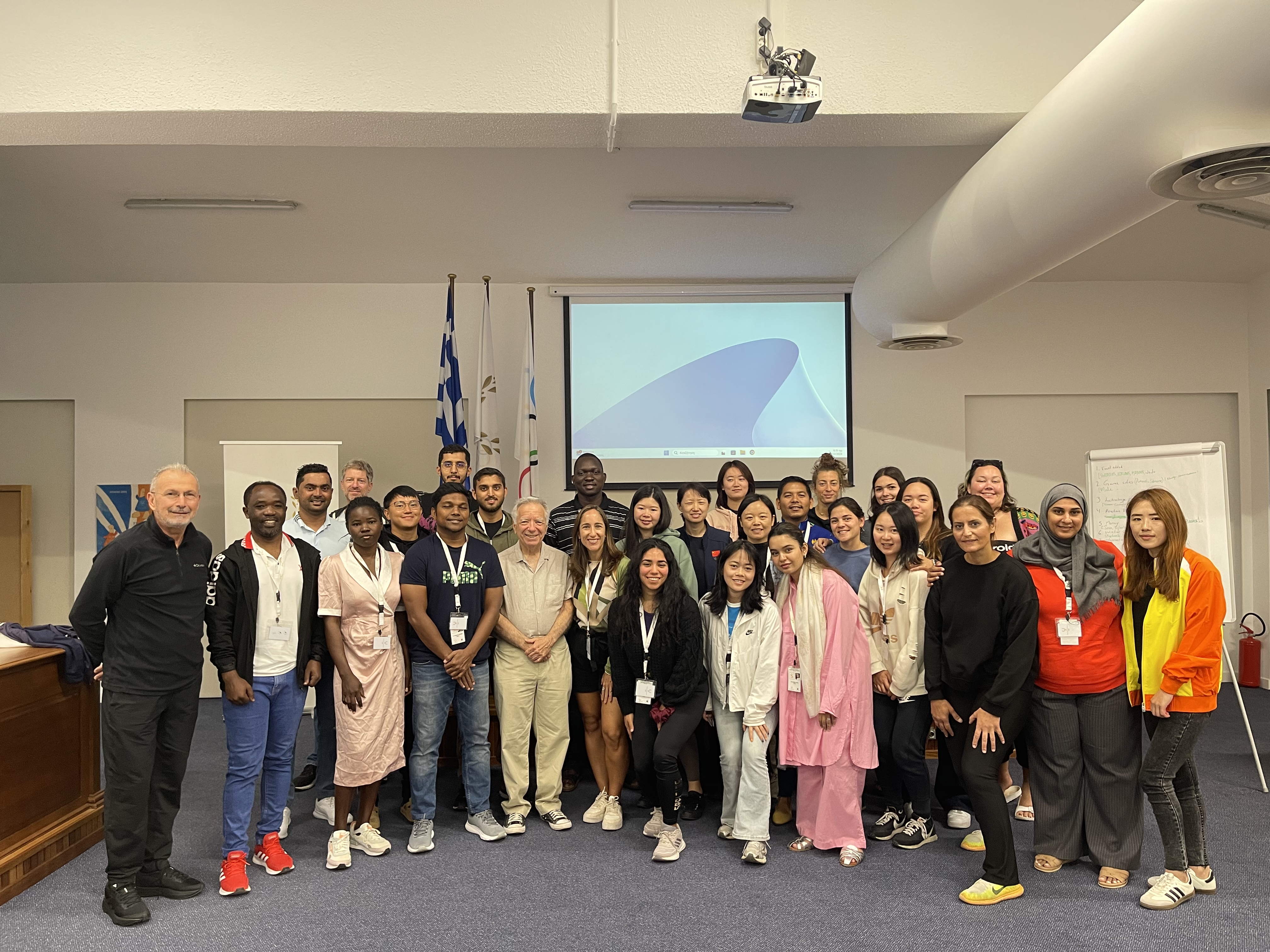
The modern Olympic Games (revival, historic development of the Summer and Winter Olympic Games – social, political and cultural aspects of the Olympic Games – Olympic Institutions – Olympic Law)
(2024_M.1.2) - Dr. Georgiadis
Περιγραφή Μαθήματος
Aim of the course
The purpose of this module is to explore the historical and philosophical underpinnings of the Olympic Games and their evolution. Through instruction and experiential learning activities, students will have the opportunity to analyze, compare the relationship of the Olympic Movement with the ethics and philosophy of Olympism, and apply them to different cultures and societies. Furthermore, students will critically examine the collaborations and the accomplishments achieved by the Olympic Movement, and the challenges it faces, from a variety of viewpoints.
By the end of this module, students will be able to:
- Approach, broaden and apprehend the ideological currents of the Olympic Games’ revival and the ideas of Baron Pierre de Coubertin.
- Understand the history of, and recent trends in the relationship between the Olympic Movement, globalization, and the world system.
- Understand the theory, content and methodologies of Olympic values education using the IOC’s Olympic Values Education Toolkit as a reference.
- Identify the challenges and opportunities for developing and implementing Olympic education initiatives in different cultural contexts.
- Understand the meaning of Olympic Truce in the modern world, the connection between sports, peace and education and the importance of applying the Olympic ideals in everyday life.
- Understand the legal basis for the IOC as an international non-governmental organization and its relationships with other NGOs, the UN system, governments, and corporations; and understand the legal status of the Olympic Host City Contract.
- Understand social responsibility issues – especially the environment, volunteerism, human rights, diversity and inclusion, and multiculturalism - involved in organizing an Olympic mega-event, their importance in communications, and currently available strategies for managing them.
- Critically reflect on the relationship between marketing and education in the Olympic Movement and the implications for the dissemination of Olympic values; critically analyze the relationship between Olympic ideals and realities.
- Situate the Olympic Movement within global political, cultural, and economic trends of the past century, and critically analyze risks and opportunities in the near future (issues of Olympic heritage/legacy).
- Broaden the knowledge and sharpens the critical ability of the students regarding the historical, socio-cultural, political, financial and educational dimensions of the Olympic Movement.
- Familiarize the students with educational experiences and procedures that enable them to develop their critical thinking and conceive the deeper meaning of the Olympic Movement.
- Apprehend and perceive the humanistic dimension of the Olympic Games.
Ημερομηνία δημιουργίας
Τετάρτη 16 Οκτωβρίου 2024
-
Δεν υπάρχει περίγραμμα